
Somewhere Between a CT Tech and the Radiologist, My Lung Cancer Became Paperwork
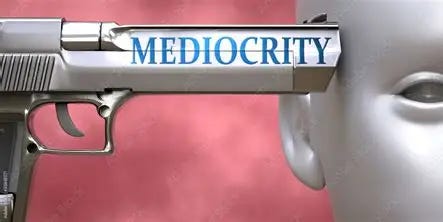
Mediocrity is Dangerous

UPDATE JUNE 13, 2026
After waiting nearly a week for the results of my lung cancer restaging CT scan, I finally saw that the chest CT report had been posted to my portal. Unfortunately, it contained the same error that had already been identified and corrected months earlier.
The Original Error
Months ago, a radiology report incorrectly stated that I had undergone a left upper lobectomy—a surgery I have never had. After discovering the error, I requested a correction. An addendum was eventually issued confirming that no lobectomy had occurred.
The Error Reappeared
The new report specifically referenced “lobectomy scarring,” despite the prior addendum correcting that point.
Clarifying the Record
· There has been no lobectomy.
· There are no surgical staples.
· There are no surgical clips.
· There is no history of surgical removal of my left upper lobe.
The Larger Concern
At this point, the question is no longer how the original error happened. The more troubling question is why, after being formally corrected, the same error reappeared in a subsequent report written by the same radiologist.
Fierce mediocrity reigns supreme.
Today I learned that my lung cancer Restaging CT scan is apparently on vacation.
Not literally, of course.
The people who read and process these scans are taking vacations. Everyone deserves time off. But when I called to find out why I still didn’t have the results of my restaging CT scan of my chest, abdomen, and pelvis, I was told it is “vacation time” and that I should wait another three to five days.
Three to five days.
If you’re healthy, that may sound reasonable.
If you’re a cancer patient waiting to find out whether your treatment worked, whether the disease has spread, or whether the next phase of your life is about to begin, it sounds like an eternity.
This is not a routine screening exam. This is a restaging scan for lung cancer. The purpose of the scan is to answer one of the most important questions a cancer patient can face: What happens next?
But somewhere between the CT tech who performed the scan and the radiologist who was supposed to interpret it, my cancer became paperwork.
That sentence captures something that has bothered me for months about modern health care. The problem is not usually incompetence. It is mediocrity.
Mediocrity is more dangerous when it starts to feel normal.
Who will look at a delayed cancer scan and say, “This is unacceptable.” Instead of, “Your report is in a queue. Staffing is short. Somebody is on vacation. You just have to wait.” Shrug.
But increasingly, the patient is expected to do much more than wait.
We’re expected to track down test results, get pre-authorization faxed to insurance carriers, coordinate communication among specialists, notice errors in our medical records. We’re expected to become quality-control managers for a system that insists we trust it.
A recent CT found that my left upper lobe had been surgically removed.
It had not.
That seems like a significant detail. Upper left lobe surgically removed. You’d think I’d remember that. You’d think there would be clips (surgical staples) in my body to guide the radiologist through the surgical area. You’d think when I said I did not have surgery, I’d be believed.
I never had surgery. I never had surgery to remove my left upper lobe. Yet there it was in black and white, part of the permanent medical record. Had I not read the report myself, who knows how long the error might have remained there?
I was able to fight for an addendum to the report so future care givers wouldn’t treat me as if I lost my upper left lobe. I had to figure out what to do and it took weeks to navigate the labyrinth of paperwork and phone calls needed to amend the report. A simple phone call between the radiologist and my oncologist would’ve got it done, but the imaging center would not agree to speak to her even after I signed an authorization. She called the radiologist twice. He would not get on the phone with her.
I had to get it done.
The correction depended on me. I was the one who read the report. I was the one who had to act. My oncologist, who ordered the scan, was NOT in their SHARE system. I had to sign an authorization to release health information just to include her. They still would not speak to her, and SHE ORDERED THE DAMN SCAN!
The system ultimately fixed the mistake, but only after the patient became the quality-control department.
That seems to be the unspoken expectation in modern health care. Patients are encouraged to advocate for themselves, but advocacy increasingly means catching errors that should never have made it into the record in the first place.
The experience left me wondering how many patients never notice these mistakes.
How many people assume the chart is correct because surely someone checked?
How many treatment decisions begin with records that contain errors nobody caught?
Imagine if airline passengers were expected to verify the pilot’s flight plan.
Imagine if bank customers were expected to reconcile discrepancies between departments because the institution couldn’t communicate internally.
Imagine hiring an attorney to defend you in a serious lawsuit. You receive a copy of the court filing and discover it states that you previously pleaded guilty in a case that never existed. It states you served five years in prison! No one would call that excellent legal representation. Most people would question the reliability of the entire process.
I would call all of those systems broken.
Yet in health care, patients are increasingly expected to accept this as normal. We are told to advocate for ourselves, but advocacy often means serving as the final fact-checker for our own medical records.
The people working within the system are not the villains. Most physicians, nurses, technicians, and support staff are trying their best within structures they did not create. They are overbooked, overburdened, and constrained by administrative demands that often seem disconnected from patient care.
But acknowledging that reality does not excuse the result.
For patients, especially cancer patients, time does not move at the same speed it does for everyone else.
A week waiting for a package delivery is an annoyance.
A week waiting for a restaurant reservation is a minor inconvenience.
A week waiting to learn whether cancer is growing, shrinking, or spreading feels like a lifetime.
Every day contains questions.
Every day contains uncertainty.
Every day contains the quiet fear that the answer may not be what you hope it is.
It is a person’s future.
It is a family waiting for news.
It is a treatment plan hanging in the balance.
It is sleep lost, anxiety gained, and days measured differently than they are by people whose lives are not organized around scan results and blood counts.
When mediocrity becomes routine, nobody notices it anymore, except the people whose lives depend on excellence.

I do not accept the idea that patients should monitor the system instead of the system monitoring patients.
The greatest problem in American health care may not be malpractice, negligence, or incompetence.
It may be the quiet acceptance of mediocrity.
No one ever said:
Can anyone recommend a mediocre surgeon?
Do you know a mediocre hairdresser? I want a mediocre haircut.
Do you know a mediocre restaurant?
I need a mediocre radiologist.
If you have a similar story let me know in the comment section!
I’d love to hear from you
Sorry Randi, that’s awful. I was also diagnosed last year with breast cancer for the second time. But the radiologist didn’t catch it. My plastic surgeon did. After that the oncology surgeon was scrambling to find my cancer and finally admitted she saw something in my last 2 mammograms that was the cancer but the radiologist deemed it “stable “ I’ve been asking myself are they incompetent? And now that I’m finished with treatment I’m asking my oncologist what’s the point of mammograms if they didn’t flag my last cancer. So, succeeded in advocating for an MRI every year as well as the mammogram staggered by 6 months. I don’t know what to think but I do know your pain.
We love you Randi and are here for you. Thanks for staying the course and reminding us who we are. By being who you are.